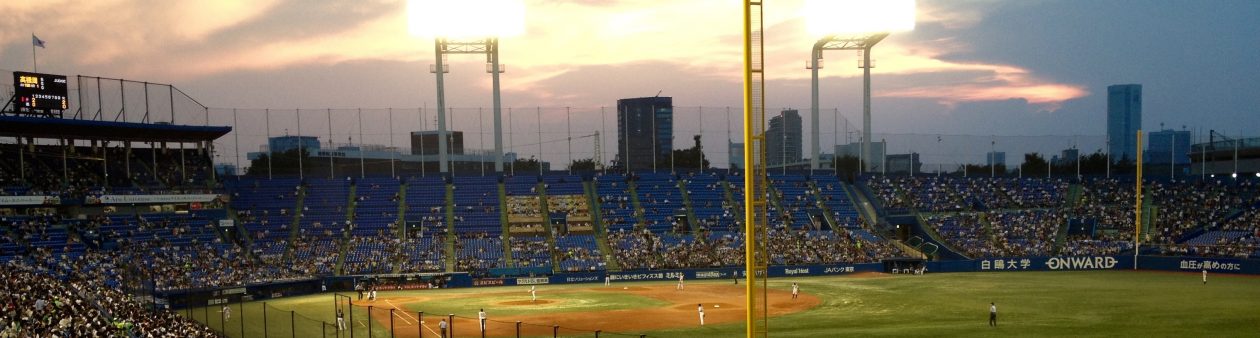
Only two teams in the history of Japanese professional baseball have had more success than the SoftBank Hawks since the draft created a nearly level playing field in terms of amateur talent acquisition in Japanese pro baseball.
The most obvious answer is that the Hawks, with three seperate farm teams, go far beyond the one team every NPB team must field with regularly scheduled games against mostly professional opposition. Because of that, SoftBank has been able to create a larger talent base than the other 11 teams.
After that the reasons tend to focus on team culture.
On Friday, team advisor Kenji Johjima, talked about the way best practices are transmitted throughout the entire organization. He said thatevery notable play at the major league level, whether a success or a mistake, is broken down and analyzed to become daily study material throughout the system the following day.
This, Jojima said, puts the major league players on the spot to lead by example. Jojima said this system instituted by current manager Hiroki Kokubo was meant to establish best-practices for base running, fielding and batting.
This kind of thing has been Hawks policy for a while in one way or another. Former manager Kimiyasu Kudo was big on clear rules. He recently said there is a way to do everything, and these must be mastered in order to earn regular playing time.
During one of our first interviews, current chairman Sadaharu Oh said that in the 1990s, the guy who made the rules was Hall of Fame executive Rikuo Nemoto.
“Nemoto had rules but it wasn’t just rules. He wanted everyone to know how important everyone’s job was – even it that job was answering phones in the office – to the success of the team on the field,” Oh said.
And then there was skullduggery
Nemoto was largely responsible for the first Hawks dynasty in Fukuoka, from 1999 to 2005, not just because of rules, but because he was expert at getting around them.
This is when the team acquired Jojima who went on to become was arguably one of the best players in Japan at the time. That team, like the Seibu Lions dynasty Nemoto built 15 years earlier was about finding ways to acquire more of the best amateur talent through a draft system that was set up to prevent one team getting all the goodies.
Mr. Nemoto’s Magical Mystery Tour tells how the Hawks were able to snag Jojima easily in the draft because they were mysteriously the only NPB team that knew Jojima wasn’t going to university as he had loudly proclaimed to the world.
One-sided wonders
Yuichi “Gori” Matsumoto, the Hawks’ outstanding longtime international director, told me that once that the key is cultivating hunger and competition among their large minor-league talent base.
When less experienced players get opportunities late in games, he said, they put the pedal to the metal because they are expected it was their best chance to show what they could do.
His answer was in response to a question I had about the large number of blowout wins the team had recorded one year. With a four- or five-run late lead, the team would turn the youngsters loose and they would run up the score.
Someone’s waiting to take your place
Two imports who finished their impressive Japan careers in Fukuoka each offered versions of the the following: Other teams talk about winning, but everything you do with the Hawks is under scrutiny and if you’re not contributing as much as you should toward that team goal, there is no room for you.”
At the start of the last four seasons, the Hawks have averaged 39 non-contract developmental players on their roster. The Yomiuri Giants averaged 29, while the Orix Buffaloes were third with around 14. It’s not just the number of players, but its also the investment in theit training.
SoftBank spends on facilities and expertise. Ten years ago, when Atsushi Toriida was in charge of rehab for the club a few years back, he was asked for input on the equipment needed at the minor league facility the team was planning.
One piece of equipment he said was necessary for the state-of-the-art facility the front office was talking about came with a huge price tag, but would be twice as expensive if installed after the facility was already built. It was added to the budget, he said, without any hesitation.
The big picture
When Hideki Matsui was named Yomiuri Giants manager the day before the Japan Series started, he said one of his goals was for the Giants to catch up to MLB.
That has long been the goal that Yomiuri has said it aspires to, but the organization’s actions as the most influential voice in NPB suggest that “catching up with MLB” is simply branding, since the organization has made every effort to limit the size and scope of NPB’s business.
Yomiuri is less interested in catching up with MLB than it is in maintaining its status of having the most sway within NPB. Yomiuri is happy with the way the system works with the lone exception that its team has not managed to maintain the dominance it had from 1951 to 1977 because nine teams voted to introduce an amateur draft in 1965.
No matter what Matsui wants, Yomiuri is not going to turn around and start working toward the structural changes necessary to raise the competitive level in Japan that implies.
The one organization that has demonstrated its true desire to “catch up” with MLB is the Hawks. Everything the team does points in that direction. They will never make it as long as Yomiuri holds NPB back, though.
