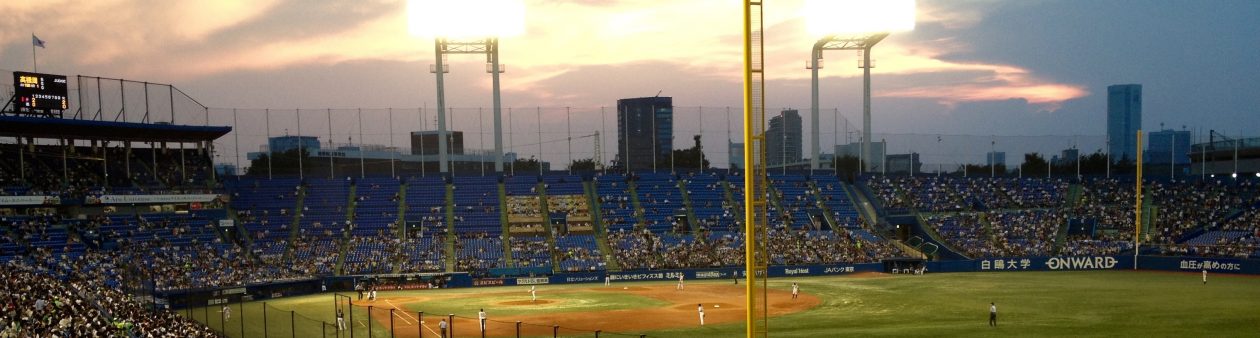

Back in the day, there was a left-handed pitcher on the BayStars’ farm team. He didn’t walk guys and didn’t allow home runs, which is saying something in the high-scoring Eastern League. The BayStars, however, decided they had other options. That was the end of the 2012 season. Six and a half years later, Brandon Mann is back in Japan with the Pacific League’s Lotte Marines, having completed a
Because the BayStars were a terrible team in 2011, and Mann had done well on the farm team, it was a mystery why he didn’t get more opportunities to pitch with the first team in Yokohama.
Too young to know
“When I was here last time, I was just young and I inexperienced. I got here at 26 and I’d only played a little bit of Double-A time when I originally came,” Mann said at Zozo Marine Stadium on March 30.
“After 2012, then indie ball and I just couldn’t get picked up. A lot of minor leagues and indie ball and then the Rangers finally gave me a shot in Triple-A and I put up good numbers there, and they called me up. Nobody else was doing well, and they said, ‘We’ll take a shot on this guy.’ I threw well my first few times up there. For me it was about I want to get back to Japan. Honestly, that was my thought process.”
“That (Japan) experience, when I got to the big
But if he couldn’t persuade people to take a shot on him six years earlier, what happened between Point A and B to make the Rangers and Marines give him a second look?
Grinding it out in the minors
“I played in the BC league for an entire season, and I got crushed. It was shocking and it made me work harder. I finished the year really well and actually got a workout with SoftBank. I went back to the States, I signed with the Pirates. I had a great year. I had a 2.90 ERA and they released me. They told me I was too old and I didn’t throw hard enough.”
“So I finished the year in
With increased velocity from his new offseason regime and – for once – good timing, Mann made the Rangers’ Triple-A team out of spring camp, where he’d been warned he likely wouldn’t get any contract whatsoever. Being told he was too old or too this or too that, he said, only motivated him more.
“I think that fueled me, the ‘You’re good but we’ve got younger guys,’ or he’s a fringe guy,” Mann said. “But I got to the big leagues. I’m very grateful and blessed. I was gone from Japan for six years and it took five full years before I got to the big leagues. That’s the even crazier thing.”
“There are going to be guys who make it to the big leagues fast. And then there are going to be guys here, young guys who make it to the
His journey made him an eye witness to minor league life, although by his own admission, having financially stable parents allowed him to hang in there and survive what can be a difficult existence.
Minority report
“Some people might say, ‘You only made it to the big leagues for 25 days,’ but those 25 days show a lot more heart than people who it’s just handed to them. It’s a story for the average person. I had to work really hard for it,” Mann said.
“It’s amazing that they don’t take care of their minor league players. It really is (criminal). I’ve seen so many crazy things in the minor leagues. After I played in NPB, people started actually paying me decently. “
There are 20-hour bus rides and then you get three hours of sleep, and then you go to a field and you’re there for eight or nine hours. You’re getting paid, what less than $4 an hour. I don’t know how MLB doesn’t take care of their players better.”
It extends to the balls
Another hurdle for minor league pitchers adjusting to the majors, according to Mann is the balls, which are radically different and act differently — at least in his case.
“The ball is completely different between the minors and the big leagues. To this day, I cannot understand why they do that. I have two different grips for my pitches for big league balls and minor league
“And I’m really into analytics. I train at Driveline in the offseason. When I throw with major league balls and I throw with minor league balls, the spins and the trajectories of the balls are completely different with the two balls. It’s fascinating. When I signed with Chiba, I had them send me a few of the NPB balls, so I could focus on using that with the analytics.”
While it makes sense that Japan uses balls that suit its tastes, why MLB and the U.S. minors use different balls can — like minor league salaries — only be attributed to MLB stinginess.


